✅ Why Original Spatika Has Cracks & Bubbles
1. Natural Formation Process
Spatika forms deep inside the earth under heat and pressure. As it grows:
-
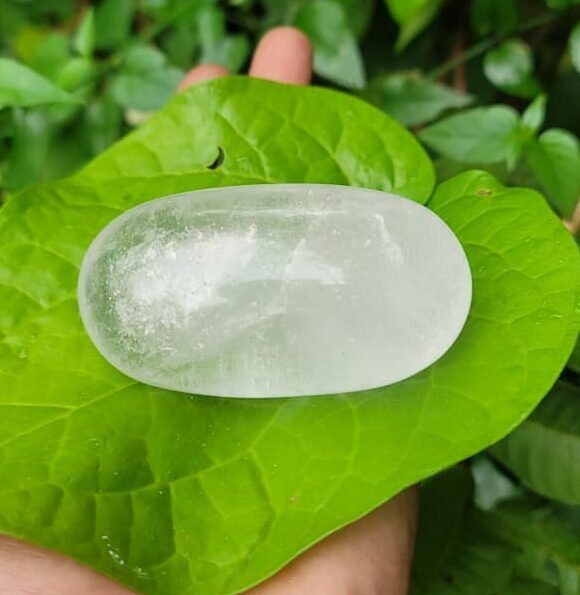
Tiny fractures (cracks) appear.
-
Gas or liquid bubbles can get trapped inside.
-
Thin internal veils or lines develop.
These are called “inclusions”, and they actually indicate natural origin.
2. Temperature Changes
Over thousands of years, quartz undergoes temperature shifts.
This creates:
-
Internal stress lines
-
Feather-like cracks
-
Rainbow reflections (light passing through micro-fractures)
3. Proof of Authenticity
Completely perfect, crystal-clear quartz with no bubbles or cracks is rare.
Most perfect-looking ones in the market are glass or synthetic quartz.
So natural inclusions ≠ defect.
They are signs of authenticity.
🌟 How to Identify Fake (Glass) Spatika
Fake spatika usually:
-
Has no cracks or bubbles at all.
-
Looks too perfect.
-
Feels lighter than real quartz.
-
Does not stay cool to the touch for long.
✔️ If your Spatika has cracks & small bubbles
It is likely natural and original.
If you want, you can send a photo of your spatika, and I can tell you whether it looks natural or synthetic.